Restaurant Menus From US Printer: Hidden Customs Costs
October 21, 2026
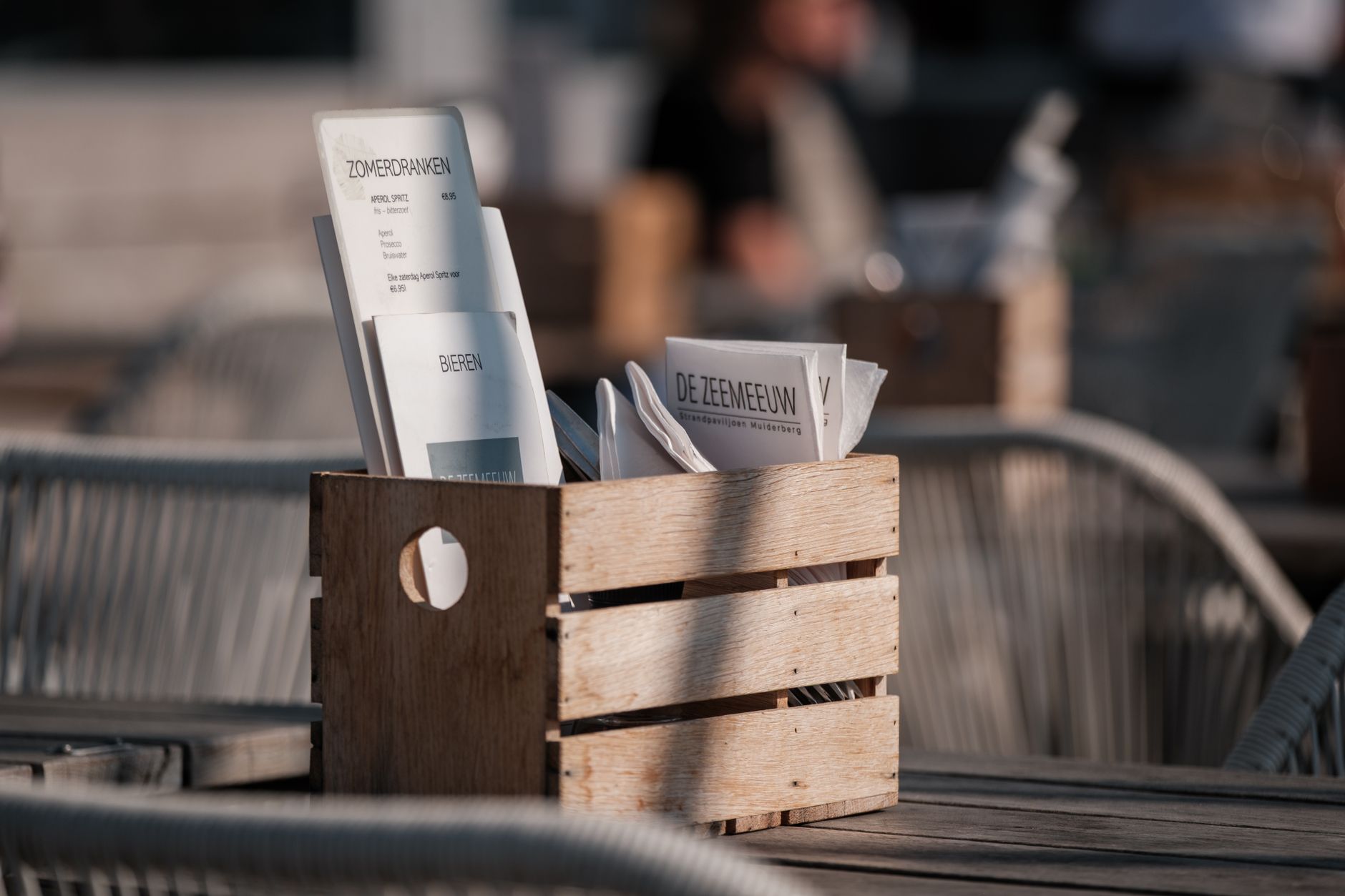
Restaurant menus from a US printer: the customs costs Canadian restaurants pay for nothing
Printed restaurant menus and table tents are not subject to Canada’s current US surtax list, as of October 2026. They are still commercial imports, however, so Canadian restaurants can face brokerage, tax administration, currency conversion, customs paperwork and border delays without receiving anything extra for those costs.
A low US quote may remain competitive, but buyers need to compare the landed cost with a Canadian supplier’s delivered price. “Duty-free” and “border-cost-free” are not the same thing.
US printer versus Canadian printer at a glance
A Canadian printer is generally the lower-risk choice for recurring menu orders, while a US printer may suit a specialized specification that is unavailable domestically. Print quality can be comparable, but the cost structure and administrative burden are not.
| Comparison point | US printer | Canadian printer |
|---|---|---|
| Quoted price | Often shown in US dollars and may exclude import charges | Usually quoted in Canadian dollars |
| Customs surtax on menus | Printed menus and table tents are not on the surtax list as of October 2026 | No customs entry for the restaurant |
| Import GST | Collected through the import process, subject to the restaurant’s tax circumstances | Handled as part of a domestic purchase |
| Brokerage or clearance | Normally charged to the receiver unless explicitly included | Not normally a separate border charge |
| Currency exposure | Exchange rate and card or bank conversion costs may apply | No foreign-currency conversion |
| Delivery predictability | Shipment can be held for customs information or inspection | No international border crossing |
| Reprints | Each shipment repeats the import process | Simpler for frequent price, item or location changes |
| Quality | Depends on stock, colour control, finishing and specifications | Also depends on stock, colour control, finishing and specifications |
| Best use case | A genuinely unique product or capability that justifies importing | Routine menus, seasonal updates, table tents and multi-location programs |
When comparing options, match the US landed cost against equivalent Canadian restaurant menus & tabletop, not merely against the first number on a quotation.
What the landed cost actually includes
The landed cost of a US menu order is the quoted price plus every expense required to receive and account for it in Canada. Some charges may be recoverable or deductible depending on the restaurant’s tax status, but they still affect cash flow and administration.
Cost components to compare
- Printed menu price: Confirm the quantity, size, page count, stock, coating, finishing and packaging.
- International freight: Cross-border transportation may be quoted separately.
- Customs duty or surtax: Printed menus and table tents are not currently on the US surtax list, but classification still needs to be correct.
- Import GST or applicable sales tax: Tax can still be payable when customs duty is zero.
- Brokerage or entry-processing fees: The broker or carrier may charge for preparing and processing the customs entry.
- Disbursement or advancement charges: A carrier or broker may charge for advancing tax or other amounts to customs.
- Currency conversion: The exchange rate and foreign-transaction fee can change the final Canadian-dollar total.
- Administrative time: Someone must confirm the importer of record, review documentation and reconcile the border invoice.
- Correction or delay costs: Missing classification, origin or invoice information can lead to storage, correction or re-delivery charges.
A domestic comparison should use the complete specification and the final Canadian-dollar amount. Published restaurant menus & tabletop pricing can provide a starting point, although exact pricing varies by format, quantity, material and finishing.
Why zero menu surtax does not mean zero border cost
As of October 2026, printed menus and table tents are not among the goods subject to Canada’s current surtax measures. The practical argument against importing them is therefore not a menu tariff, but the remaining freight, tax, brokerage, currency and compliance burden.
The current surtax rules still matter to classification
Since September 8, 2026, Canada has imposed surtaxes of 15%, 25% or 50% of the value for duty on listed goods originating in the United States (United States Surtax Order, 2026). Those rates do not apply to printed menus and table tents because those products are not on the list.
Whether a listed product is affected depends on its tariff classification and origin under CUSMA marking rules, not simply on the seller’s address. The measure can also apply to qualifying US-origin goods shipped from another country (CBSA Customs Notice 26-23, 2026).
This distinction becomes relevant when a menu shipment includes other products, such as holders, accessories or promotional kit components. Importers should not assume that every item in a mixed shipment receives the menu’s treatment.
GST is separate from surtax and duty
Import GST does not disappear merely because the customs-duty rate is zero. A GST-registered restaurant may generally be able to claim an input tax credit when it meets the applicable documentation and eligibility requirements, but the amount must still be paid, recorded and reconciled.
The current rules also show how tax can compound other border charges. In CBSA’s 2026 example for a listed product, a $150 item at a 25% surtax produces $37.50 in surtax, with GST calculated on $187.50, for $46.88 in surtax and GST together (CBSA Customs Notice 26-23, 2026). This is not a menu charge, but it illustrates why Canadian buyers must separate duty, surtax and tax rather than treating “customs” as one line.
Accent Impression produces restaurant menus and tabletop print for Canadian restaurant programs, including repeat versions and coordinated location rollouts.
Why menu reprints magnify small border costs
Menus change frequently, so even modest customs-related costs and administrative tasks can recur several times a year. A process that seems tolerable for one large order can become inefficient for seasonal launches, price changes and location-specific reprints.
Restaurants commonly update menus because of:
- Ingredient availability and supplier changes
- New pricing
- Seasonal food or beverage programs
- Limited-time offers
- Changes to legal or allergen information
- Different offerings by province or location
- Worn, stained or damaged copies
- New photography, branding or bilingual content
Every US reprint is another commercial import. It needs an invoice, a customs entry and an identified importer of record, and it may generate another brokerage invoice or documentation request.
The rules are not static, either. CBSA states that Canada’s tariff files are updated at least once each year, or whenever necessary (CBSA Customs Tariff, 2026). That makes old assumptions and previous shipment results poor substitutes for checking the current treatment.
Restaurants planning frequent revisions can consult more restaurant menus & tabletop guides when setting specifications, quantities and replacement schedules.
Does ordering in Canada improve menu quality?
Ordering domestically does not automatically make a menu better, just as ordering from the United States does not automatically make it worse. Quality comes from a clear specification, suitable materials, controlled files, accurate proofs and finishing chosen for the restaurant environment.
Compare these quality factors side by side
| Quality factor | What to confirm |
|---|---|
| Colour | Proofing method, colour expectations and treatment of food photography |
| Durability | Whether the menu must tolerate frequent handling, moisture or cleaning |
| Construction | Flat sheet, folded menu, booklet, synthetic sheet or mounted format |
| Finish | Lamination, coating, foil, embossing, die-cutting or binding |
| Legibility | Type size, contrast, lighting conditions and bilingual content |
| Consistency | Ability to reproduce the same result across reprints and locations |
| Packing | Protection against bent corners, scuffing and moisture in transit |
For Canadian restaurants, proximity is primarily a workflow advantage. Corrections, physical samples and short replacement runs do not have to cross an international border.
Which option should a Canadian restaurant choose?
Choose a Canadian printer for recurring menu programs, short reprints, changing content and multi-location distribution. Consider a US printer only when a specific capability or product difference remains valuable after calculating the full landed cost and import workload.
Choose a Canadian printer when
- Prices or menu items change regularly.
- The restaurant needs seasonal or limited-time menus.
- Different locations require different files or quantities.
- Canadian-dollar budgeting matters.
- The buyer wants fewer parties involved in delivery and accounting.
- Replacement menus may be needed in small batches.
- A border delay would disrupt a launch or opening.
Choose a US printer when
- The specification is genuinely unavailable from a suitable Canadian source.
- The quantity is large enough to absorb fixed brokerage and administrative costs.
- The landed Canadian-dollar price is still favourable.
- The restaurant has an established importer-of-record process.
- The schedule can tolerate customs review or delivery variance.
- The seller has provided complete commercial documentation.
Before placing the order, ask who will act as importer of record and who pays taxes, brokerage, disbursement fees and corrections. Restaurants importing on their own should also confirm the tariff classification with a customs broker rather than assuming every product described as a menu receives identical treatment.
Frequently asked questions
Printed menus may avoid the current US surtax, but they still cross the border as commercial goods. The questions below help buyers identify costs that a basic print quotation may not show.
Are restaurant menus from a US printer subject to Canada’s 2026 surtax?
No. As of October 2026, printed menus and table tents are not on the surtax list. A mixed shipment may include separately classified items, so the classification of every product should still be confirmed.
If menus are duty-free, why is there a customs bill?
The bill may contain import GST, brokerage, entry-processing or disbursement charges rather than customs duty. International freight and currency conversion may also appear elsewhere.
Can a restaurant recover import GST?
A GST-registered restaurant may generally claim an input tax credit when the purchase qualifies and the required import records are retained. Eligibility depends on the restaurant’s circumstances, so the accounting treatment should be confirmed with its tax professional.
Who is responsible for customs paperwork?
The importer of record is responsible for the customs entry, taxes and supporting records. The order should identify this party before production or shipment begins.
Do US-made menus automatically qualify as US-origin goods?
No. Manufacturing location and legal origin are not always identical. Origin depends on the applicable rules and supporting data, although origin does not change the fact that printed menus and table tents are currently outside the surtax list.
Is a US printer ever cheaper for a Canadian restaurant?
Yes, potentially. The valid comparison is the final Canadian-dollar landed cost, including freight, import tax administration, brokerage, currency conversion and staff time, not the quoted print price alone.
Request a quote
Rather leave the border out of it? Our Montreal team quotes in Canadian dollars, on one Canadian invoice.